

Building a Healthy Culture Part III – Starbucks
July 29, 2024
Keys to Communication – Tools
August 18, 2024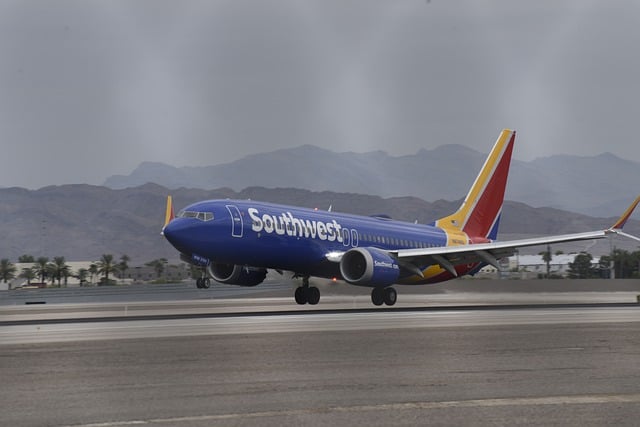
I recently finished reading Nuts! Southwest Airlines’ Crazy Recipe for Business and Personal Success by Kevin and Jackie Freiberg. This has been part of the journey of learning more about building a healthy culture. Before going any further, I want to highlight this is the foundation the organization was built on, and as in many organizations, things change. The Southwest you may know today could possibly be different.
That said, there are some excellent principles to learn from this maverick organization that has become a standard in low-fare flying. What helped this organization be successful year after year in its first twenty-five years? Its culture. As long as it does not lose its foundation, I believe it will continue to be successful.
I drew five principles from this that we can all apply to building a healthy culture.
Focus on Protecting Your People
“The customer is not always right. Employees, not customers, come first.”
Freiberg
This is a bold statement that seems counterintuitive, but is it really? The Southwest foundation believed that employees are first because if the employees are taken care of and supported the customers will be as well.
This is demonstrated by an excerpt from a Reader’s Digest article in 1995 where Herb Keller emphasized the customer is sometimes wrong and sometimes they need to know “Don’t abuse our people. Fly somebody else.” This is protecting your people and culture.
Whether in the corporate world, education, non-profit, or wherever, the team needs to know they are supported. This gives them security and confidence to make decisions on their own. Since Southwest’s culture is about a great customer experience, it will naturally overflow from them being treated well.
Freedom to Innovate
“People will work hard when they have the freedom to do their job the way they think it should be done.”
Freiberg
Failure is not something anyone looks forward to. However, in a culture where people are allowed to take risks and test new ideas, failure is embraced as part of the process. By embracing a culture that accepts risk and failure as part of the process, people have freedom.
Depending on what you lead, it may be appropriate to limit innovation. For example, in a highly regulated industry like the financial sector, there are lines no one should cross, but people can innovate all they want inside those lines.
Freedom inspires creativity which leads to even greater vision and accomplishment.
Find and Stick to Your Core Purpose
“…those who forget their purpose and step outside their niche have a tendency to fail.”
Freiberg
In his book How The Mighty Fall author and researcher Jim Collins explains that organizations pursuing more with an undisciplined approach are heading toward a cliff of failure. The opposite of this is knowing and sticking to what you are good at. Southwest knew its niche and stuck to it during the foundational years. This discipline provided clarity to the organization.
As a leader, your job is to provide a clear purpose for the team. In a world of constant change, your team needs a clear target. That target is your core purpose. When we lose sight of our core purpose, we drift and can cause unnecessary cultural frustration.
Float as a Leader
“At Southwest, managers understand that they need to spend at least one-third of their time out of their office, walking around.”
Freiberg
In the foundational years, even as they grew, it was not uncommon for people to see executive leaders out on the tarmac helping load luggage or working alongside mechanics. What made them do this? They could see and understand what their team members were experiencing, which allowed them to discern challenges on the front lines.
Leadership is about people, and if we stay hidden in an office, we will not connect with and possibly understand those we lead. Spending time with your team strengthens your relationships, makes you approachable, and increases your awareness of what is really going on. Be intentional, though, when floating so you are adding value to your people and listening to them and not just making an appearance. Be fully present and connect.
Find a Way to be Fun
“This is a company created by its people . . . It is a daily celebration here of customers. It is a daily celebration of great employees. It is a daily celebration of positive things that happen.”
Herb Kelleher
Southwest was founded with an emphasis on doing your work with excellence while having fun at the same time. From crazy uniforms in the beginning to less rigid safety announcements on planes. Employees are given the freedom to make decisions within certain parameters.
Bob Nelson, in a Harvard Business Review article, highlighted that fun at work can have a positive impact on creativity, engagement, and purpose.1 Maybe Herb Kelleher intuitively understood this. All three of the elements Nelson highlights are visible in the Southwest experience in the first twenty-five years.
As a leader, you want to accomplish goals. Maybe shifting language can create more fun in your workplace. Something as simple as moving from “I have to” to “I get to” can make a huge difference in how we show up in our organization. Sometimes, as leaders, we need to relax and enjoy the process and the people we are with.
When you look at these areas, which one do you need to work on? Take a moment and write down one area you will work on during the next thirty days to improve or strengthen this element in your culture. Want to experience a tool to help you get feedback on how your team is doing in a safe, positive, and interactive environment? Contact me about facilitating the Leadership Game with your team. Keep building a great culture and lead well!
© 2024 Wheeler Coaching, All Rights Reserved
- https://hbr.org/2022/05/why-work-should-be-fun retrieved 8/2/24.
- Freiberg, Kevin & Jackie. Nuts! Southwest Airlines’ Crazy Recipe for Business and Personal Success. Bard Press, TX.